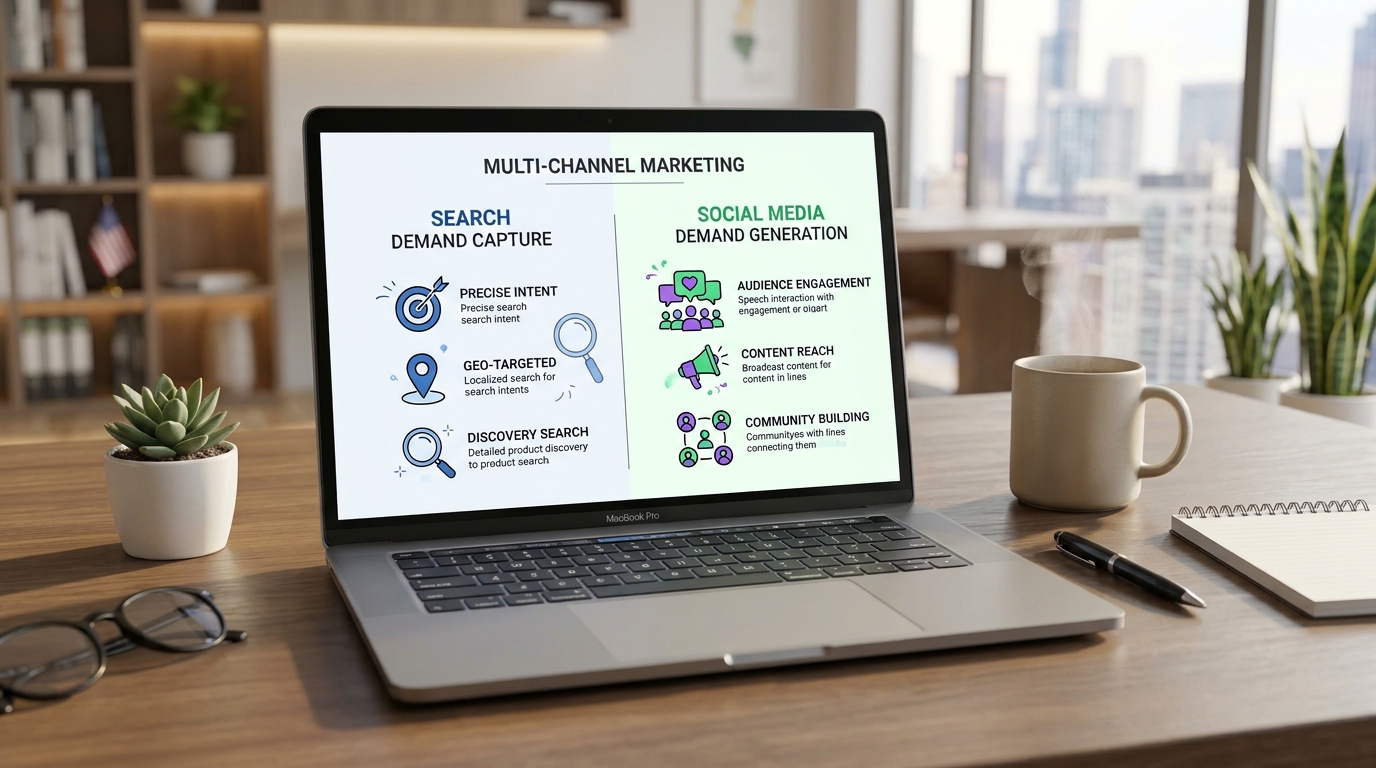
Google Ads vs Meta Ads: Demand Capture vs Generation
Google Ads and Meta Ads work in different ways.
Google reaches people who are searching.
Meta reaches people who are scrolling.
Knowing the difference between Google Ads and Meta Ads helps you pick the right one for your business. This Google Ads vs Meta Ads guide explains how each platform works and helps you decide between Google Ads or Facebook Ads for a small business like yours.
Google Ads: Reaching People Who Search
Google Search ads appear when someone types a question or a need into Google. This is demand capture, because you reach people who already want what you sell. Google Search ads for small businesses work well when your customers already look for what you sell. A person searching for a service is often ready to act, so you meet them at the moment they are looking.
Meta Ads: Reaching People Who Scroll
Meta Ads appear on Facebook and Instagram while people browse. This is demand generation, because you create interest in people who were not searching yet. Facebook and Instagram ads for small businesses work well when your customers would be interested once they see you. A strong image or video introduces your offer and builds interest.
How to Choose: 3 Questions
Understanding demand capture vs. demand generation makes this decision simple. Ask yourself these three questions:
1. Do people already search for what I sell?
If yes, Google Ads is a natural fit.
2. Do I need to introduce my offer to people who do not know it exists?
If yes, Meta Ads is a natural fit.
3. Do I have a clear offer and landing page?
Both platforms need one. Fix this first.
Google Ads vs Meta Ads Cost Per Lead
Cost per lead is the number that matters when you compare the two platforms. Google Ads vs Meta Ads cost per lead varies by industry, location, and offer, so there is no single right figure. Google clicks often cost more because people are searching with intent. Meta clicks often cost less but may need more impressions to produce a lead. Run a small test on one platform, record your own cost per lead and lead quality, and compare against your results before scaling.
When to Use Both
Google captures people who are already looking. Meta introduces you to people who are not yet. Many businesses start with one, learn from it, then add the other. Starting with one keeps your budget focused and your results easier to read.
Running Google Ads and Meta Ads together lets Meta build awareness while Google collects the people who go on to search for you.
“Start where your customer already is. Some are searching. Some are scrolling. Your job is to meet them in the right place.” Waqar Ahmed, Founder of Tectanic
FAQs
Not Sure Which Platform Fits Your Business?
Tectanic helps businesses choose and run the right ads, whether you need a clear answer on Google Ads vs. Meta Ads, a tested cost per lead baseline, or both platforms working together.
Tectanic is one of the advertising agencies in Delaware and a specialist PPC agency serving businesses across the US. Book a call, and we will look at your goals together.